How to Automate Lead Follow-Up Without Sounding Robotic.
Automated follow-up helps your business respond faster, stay consistent, and prevent valuable opportunities from being forgotten. When messages are thoughtfully timed and written around the customer’s needs, automation can feel personal and helpful rather than cold or robotic.
Why Lead Follow Up Matters
Most people do not make a decision after one interaction. They may be comparing providers, reviewing their budget, checking their schedule, speaking with another decision maker, or simply dealing with other priorities.
Silence does not always mean that a lead has lost interest. Sometimes the person needs more information. Sometimes they intend to respond but get distracted. Sometimes they are interested but not ready to move forward today.
Without a consistent follow up process, these opportunities are easy to lose. A business may spend considerable time and money generating leads, only to let interested people disappear because nobody responded quickly or remembered to check in again.
Thoughtful follow up helps your business:
Respond while the person’s interest is still fresh.
Answer questions before uncertainty grows.
Remind people who intended to take the next step.
Build trust through clear and consistent communication.
Keep opportunities organized until a decision is made.
Reconnect with people who were interested but not ready.
A good follow up process does not pressure people. It simply makes it easier for them to continue the conversation when the timing is right.
Automation itself is not what makes a message sound robotic. The problem is usually the way the message is written or the situation in which it is sent.
An automated message feels impersonal when it ignores what the person asked about, uses exaggerated sales language, arrives too frequently, or continues after the person has already responded.
The goal is not to convince people that every message was typed manually. The goal is to make every message timely, relevant, respectful, and useful.

Here are several ways to make automated follow up feel more natural:
Use a Friendly, Conversational Tone
Write the way a helpful person would speak. Use clear language, short sentences, and a warm tone. Avoid formal phrases that sound like a mass email.
Instead of writing:
We are reaching out regarding your recent expression of interest in our service offerings.
Write:
Thanks for asking about our services. I wanted to see if you had any questions.
The second version is easier to read and sounds more like a real conversation.
Refer to What the Person Actually Requested
Using someone’s first name is helpful, but meaningful personalization goes further. Mention the service, estimate, appointment, product, or question that caused the follow up.
Compare these two messages:
Hi Mark, just following up to see if you are interested.
Hi Mark, I wanted to check whether you had any questions about the flooring estimate we sent on Tuesday.
The first message knows Mark’s name. The second understands why Mark is being contacted.
Give Every Message One Purpose
Each follow up should have one clear goal. It may confirm that an inquiry was received, answer a common question, remind someone about an appointment, provide useful information, or make the next step easier.
When one message tries to explain everything, it becomes difficult to read and easy to ignore.
Provide Something Helpful
Avoid sending repeated messages that only say, “Just checking in.” Each follow up should add something useful to the conversation.
You might:
Answer a common question.
Explain what happens next.
Share information the person may need before deciding.
Provide an easy booking link.
Offer to explain the available options.
Let the person know how to reach a team member.
Make It Easy to Reply
End with a simple question that invites a natural response.
For example:
Would you like me to send more information?
Is there a better time to reach you?
Would you like help choosing the right option?
Do you have any questions about the estimate?
Are you still interested in moving forward?
Avoid Artificial Urgency
Do not create a false deadline simply to force a response. If a real deadline, limited appointment, or expiring offer exists, explain it honestly. Pressure may produce a quick reaction, but it can also damage trust.
Allow a Human to Step In
Automation should make access to your business easier. It should never trap someone in a process with no way to reach a person.
A sentence such as, “Reply here if you would like help from our team,” gives the recipient a clear path to human assistance.
A Practical Lead Follow Up Sequence
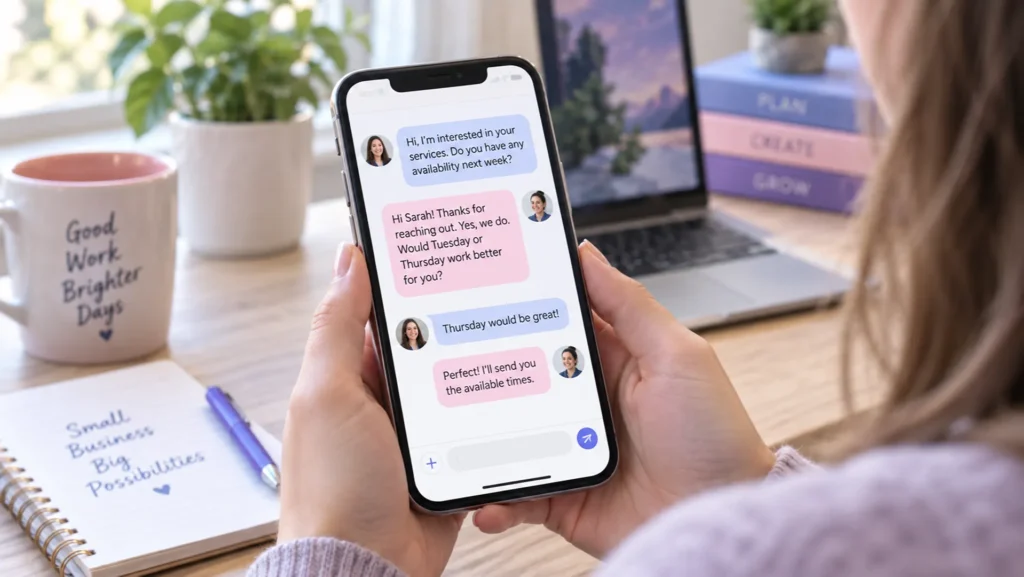
There is no perfect sequence for every business. The timing will depend on the service, the urgency of the inquiry, the length of the buying process, and the expectations of the customer.
However, the following five message structure provides a useful starting point.
Message 1: Acknowledge the Inquiry
Send a prompt confirmation that the person’s request was received and explain what happens next.
Hi Maria, thanks for contacting us about fireplace installation. We received your request and will be in touch shortly. If you have measurements or photos you would like us to review, you can reply directly to this message.
Message 2: Offer Help
If the person has not responded, offer assistance instead of immediately asking for a decision.
Hi Maria, I wanted to check whether you had any questions about the installation process. If you are still comparing options, I would be happy to explain what information is helpful before choosing a fireplace.
Message 3: Make the Next Step Easy
Remove unnecessary friction and give the person one clear action.
If you would like to discuss the project, you can choose a convenient consultation time here: [BOOKING LINK]. If you would rather ask a quick question first, simply reply to this message.
Message 4: Address a Common Concern
Share useful information that may help the person make a decision.
One question we often receive is whether an in person visit is needed before an accurate estimate can be prepared. In many cases, a few measurements and photos are enough to begin. Let me know if you would like the list of what to send.
Message 5: Close the Loop Respectfully
If several attempts receive no response, end the active sequence without pressure.
Hi Maria, I have not heard back, so I will close the loop for now. If the project is still on your list, you are welcome to reply whenever the timing is right. We will be happy to help.
This final message leaves the relationship in a positive place and avoids sending endless reminders that may damage trust.
Keep the Experience Human
The best automation responds to what the customer does rather than sending every person through the same rigid sequence.
If a lead replies, scheduled reminders should pause. If someone books an appointment, sales messages should be replaced by confirmations and reminders. If a customer makes a purchase, lead messages should stop and the appropriate customer communication should begin.
A person should normally step in when:
The customer is upset or confused.
The request is sensitive or complicated.
A meaningful price discussion is required.
The customer asks to speak with someone.
The conversation reaches an important decision.
The automated process does not understand the response.
Personal judgment or empathy would improve the experience.
Automation should handle repetitive communication and prevent opportunities from being forgotten. It should create more time for valuable human conversations, not eliminate them.
Quick Tip: Read every automated message out loud before using it. If it does not sound like something you or your team would naturally say, rewrite it until it does.
How Often Should You Follow Up?
The frequency should reflect the type and urgency of the inquiry. Someone requesting emergency service needs a faster response than someone researching a project for next year.
Use these general guidelines:
Respond to new inquiries as quickly as your business can reliably manage.
Leave enough time between later messages for the person to read and respond.
Change the purpose of each message instead of repeating the same request.
Watch for replies, bookings, cancellations, and purchases.
Stop when the person opts out or clearly says they are not interested.
Move older opportunities into a separate long term follow up process when appropriate.
More messages do not automatically produce more customers. Relevant information and thoughtful timing usually matter more than volume.
Frequently Asked Questions
How Quickly Should I Follow Up With a New Lead?
Respond as quickly as your business can do so accurately and consistently. An immediate acknowledgment can reassure the person that their request was received, but do not promise an immediate personal response unless your team can deliver it.
How Many Follow Up Messages Should I Send?
There is no universal number. The right amount depends on the urgency, value, buying process, communication channel, and level of interest. A short sequence containing several useful messages is normally better than repeatedly sending the same reminder.
Should I Use Text Messages or Email?
Use the channel that best suits the message and the customer’s preference. Text messages work well for brief questions, confirmations, and reminders. Email is better for detailed information, documents, estimates, and longer explanations. Always respect consent and the communication laws that apply where you operate.
How Can I Personalize Messages Without Writing Each One Manually?
Use information the person has already provided, such as their name, requested service, appointment, location, estimate, or previous action. Create different messages for different situations instead of forcing every lead into one generic sequence.
What Should Happen When a Lead Replies?
The existing automation should pause, end, or move the person into a more appropriate process. Their response should be answered according to what they actually said. Continuing to send scheduled messages without acknowledging the reply will make the experience feel robotic immediately.
When Should Automated Follow Up Stop?
It should stop when the person opts out, clearly declines, becomes a customer, enters a different process, or requires direct human assistance. It can also end after a respectful closing message when several attempts receive no response.
Can Artificial Intelligence Handle Lead Follow Up?
Artificial intelligence can help answer common questions, collect information, qualify inquiries, and guide people toward an appointment or another next step. It should have clear boundaries and a dependable way to involve a person when a request is sensitive, complicated, or outside its knowledge.
Will Automation Replace Personal Service?
It should not. Effective automation handles acknowledgments, reminders, routine updates, and repetitive tasks. This gives your team more time to provide personal help when judgment, empathy, and expertise matter most.
STILL HAVE QUESTIONS?
Book a free strategy call with our team. We’ll answer your questions, learn more about your business and goals, and help you identify the right next steps for growth.